Small steps. lasting change. true wellness
Broccoli Sprouts: Superfood Hype or Science-Backed Key to Energy, Hormonal Balance & Longevity?
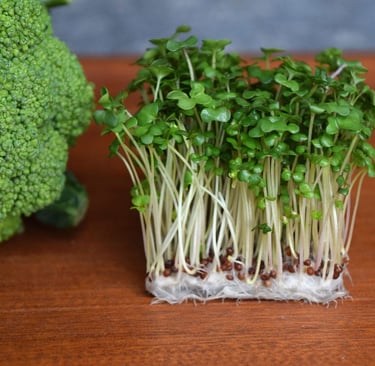
In the wellness world, superfoods appear almost every month. Unlike many health trends driven mainly by marketing, broccoli sprouts are supported by decades of scientific research including human clinical trials investigating their effects on detoxification, inflammation, metabolic health, hormonal balance, and cellular protection including mitochondria (for energy production). So, are broccoli sprouts just another health hype… or are they truly one of the most powerful functional foods available today? The science suggests they deserve serious attention.
Elena Abramova
5/25/20265 min read
1. Why Modern Life Creates More Oxidative Stress Than Ever Before
Our bodies were designed to handle temporary stress. But modern life exposes us to chronic, continuous stressors that previous generations experienced far less intensely.
Today we face:
environmental pollution
pesticides and endocrine disruptors
processed foods
chronic psychological stress
poor sleep
excessive screen exposure
sedentary lifestyle
alcohol and medications
inflammatory diets
All of these factors increase something called oxidative stress, a state where damaging free radicals overwhelm the body’s protective systems.
Chronic oxidative stress has been associated with:
fatigue
accelerated aging
hormonal imbalance
inflammation
insulin resistance
cardiovascular disease
cognitive decline
This is one reason researchers are increasingly interested in compounds that help the body activate its own defense systems rather than simply adding external antioxidants.
One of the most researched compounds in this area is sulforaphane.
2. What Is Sulforaphane and Why Is It So Important?
Sulforaphane is a biologically active sulfur-rich compound naturally produced from cruciferous vegetables.
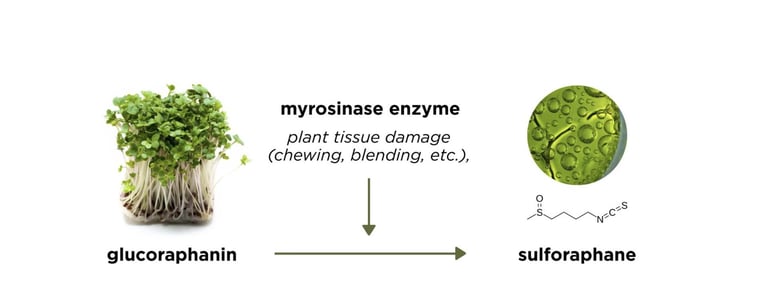
It is not naturally stored in broccoli as sulforaphane itself. Instead, broccoli sprouts contain:
glucoraphanin (inactive precursor)
myrosinase (enzyme)
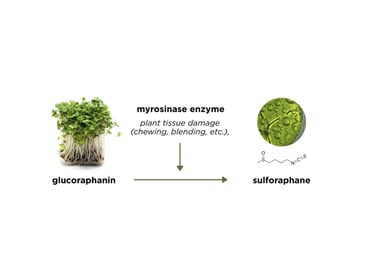
When broccoli sprouts are chopped, chewed, or blended, myrosinase converts glucoraphanin into sulforaphane.
This conversion is extremely important because sulforaphane activates a powerful protective pathway in the body called Nrf2, often referred to as the body’s “master antioxidant switch.”
Activation of Nrf2 stimulates production of glutathione, detoxification enzymes, antioxidant enzymes, cellular repair proteins.
Unlike traditional antioxidants that work temporarily, sulforaphane helps the body produce its own long-lasting defense systems.
3. Why Broccoli Sprouts Are So Special
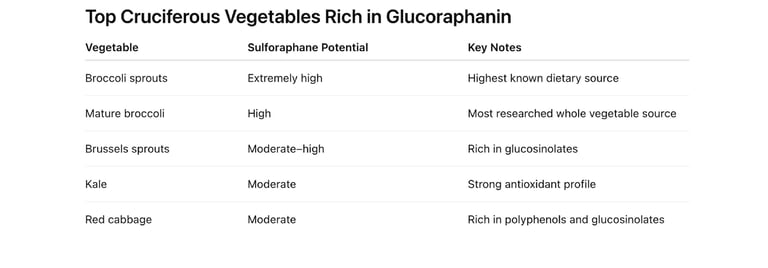
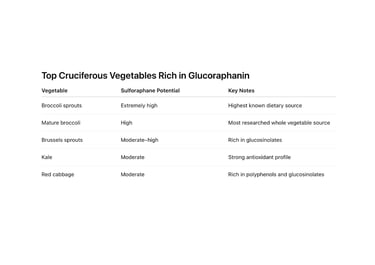
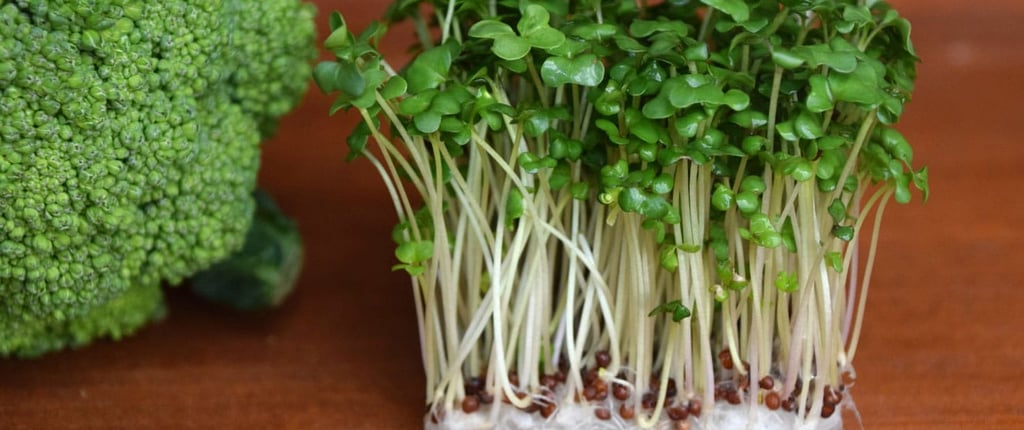
All cruciferous vegetables contain glucosinolates, but broccoli sprouts are considered the richest known dietary source of glucoraphanin.
Research shows broccoli sprouts may contain: 20–100 times more glucoraphanin than mature broccoli.
That is why tiny broccoli sprouts have become a major focus of nutritional and longevity research.
4. Benefits for Women
For women, broccoli sprouts are especially interesting because of their role in:
estrogen metabolism
liver detoxification
inflammation balance
antioxidant support
Sulforaphane supports Phase II liver detoxification pathways involved in hormone clearance and toxin elimination.
This may help support women experiencing:
PMS symptoms
estrogen dominance patterns (fibrocystic breasts, uterine fibroids, water retention and other)
peri-menopausal changes
hormonal acne
fatigue and brain fog
Importantly, broccoli sprouts do not “boost” or “suppress” hormones directly. Instead, they help the body process hormones more efficiently through liver detoxification pathways.
Some studies also suggest sulforaphane may help reduce inflammatory signaling associated with hormonal imbalance.
5. Benefits for Men
In men, broccoli sprouts are increasingly studied for:
prostate health
cardiovascular support
metabolic health
inflammation reduction
healthy aging
Sulforaphane has been investigated for its protective effects on prostate tissue due to its antioxidant and anti-inflammatory activity.
Researchers are also studying its effects on:
insulin sensitivity
mitochondrial function
vascular health
cellular aging pathways.
For men exposed to chronic stress, alcohol, poor sleep, or environmental toxins, sulforaphane may help support the body’s detoxification and repair systems naturally.
6. How to Consume Broccoli Sprouts.
The most important part is sulforaphane bioavailability. This is where many people get confused. You do not automatically absorb large amounts of sulforaphane simply by eating broccoli!
The way broccoli sprouts are consumed dramatically changes how much sulforaphane your body actually receives.
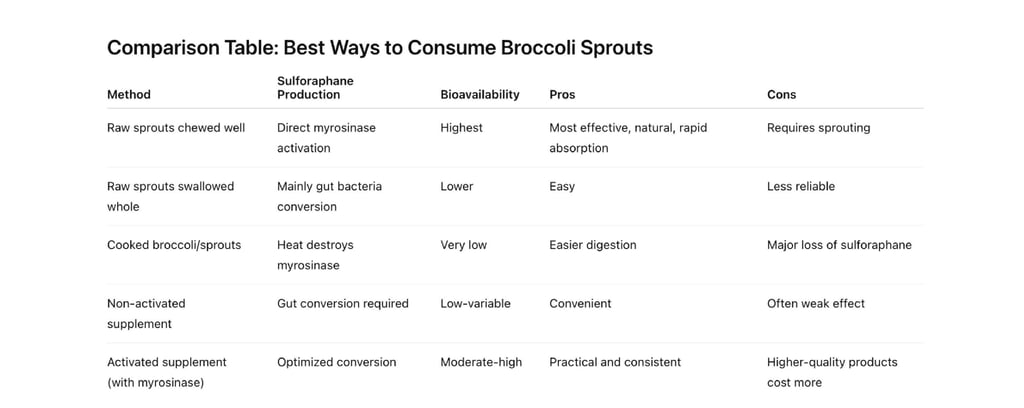
Method 1: Raw, Chopped, or Thoroughly Chewed Sprouts
When sprouts are chewed, chopped, crushed, blended the enzyme myrosinase activates immediately and converts glucoraphanin into sulforaphane before digestion.
This method produces the highest bioavailability.
Human clinical trials found sulforaphane bioavailability was:
approximately 3–4 times higher when active myrosinase was present.
One crossover clinical trial showed:
sulforaphane-rich preparations achieved about 70% bioavailability
compared with only ~5% when relying mainly on gut bacterial conversion.
Pros
highest absorption
fastest activation
whole-food nutrients and fiber
strongest evidence-supported method
Cons
requires fresh sprouts
short shelf life
stronger taste
preparation needed
Method 2: Swallowing Whole or Non-Activated Supplements
If sprouts are swallowed without chewing, or supplements contain only glucoraphanin without active myrosinase, conversion depends mostly on gut bacteria.
This creates:
lower absorption
slower conversion
major variability between individuals
Gut microbiome composition strongly affects how much sulforaphane is produced.
Pros
convenient
portable
easier for busy lifestyles
Cons
much lower bioavailability
highly dependent on microbiome
inconsistent results
A randomized, double-blind crossover study published in Scientific Reports confirmed that adding exogenous myrosinase significantly increased sulforaphane bioavailability from broccoli seed extract!
7. Fresh Sprouts vs Supplements: What Does Science Suggest?
Research generally favours:
fresh raw broccoli sprouts
orsupplements containing active myrosinase
Fresh sprouts consistently produce higher sulforaphane metabolites in plasma and urine compared with many non-activated supplements. However, realistic lifestyle matters. Many people simply do not have time to grow sprouts regularly.
In that case, the best option is:
an activated sulforaphane supplement containing myrosinase
Avoid products labeled only:
“broccoli powder”
“broccoli extract”
without mentioning: active myrosinase, or stabilized sulforaphane, or glucoraphanin conversion
How to Sprout Broccoli Seeds at Home
Growing broccoli sprouts is surprisingly simple and inexpensive.
Basic method:
Add 1–2 tablespoons broccoli sprouting seeds into a glass jar
Soak overnight (8–12 hours)
Drain and rinse twice daily
Keep jar upside down for airflow
Continue for 3–5 days
Once green leaves appear, refrigerate
Fresh sprouts are usually ready within 3–5 days.
Easy way to eat broccoli sprouts: salads, sandwiches, wraps, avocado toasts, smoothies.
8. Recommended Dosages
Fresh sprouts
Most studies and practitioners use: ¼–1 cup daily
Women: typically ¼–½ cup daily
Men: typically ½–1 cup daily
Supplements
Research doses vary widely, but many clinical studies use approximately 20–40 mg sulforaphane daily
For supplements, activated formulas with myrosinase are preferred.
9. Restrictions?
Broccoli sprouts are generally safe, but some caution is needed.
Possible considerations:
digestive bloating or gas
sulfur sensitivity
interactions with blood thinners
bacterial contamination risk in raw sprouts
For people with hypothyroidism: moderate intake is generally considered safe, especially when iodine intake is adequate.
Clinical studies have not shown significant thyroid disruption from normal cruciferous vegetable intake.
10. Final Thoughts: Hype or Real Functional Food?
Unlike many wellness trends, broccoli sprouts are supported by substantial mechanistic research and multiple human clinical trials. The science does not suggest broccoli sprouts are a miracle cure. But it does suggest they may be one of the most concentrated dietary tools for supporting:
consistent energy
detoxification pathways
antioxidant defense
inflammation regulation
metabolic resilience
healthy aging
In a world filled with chronic stress, pollution, processed food, and inflammatory lifestyles, compounds like sulforaphane may help restore part of the protective biochemical environment our bodies evolved to rely on.
References:
https://pmc.ncbi.nlm.nih.gov/articles/PMC3076202/
https://pmc.ncbi.nlm.nih.gov/articles/PMC4629881/
https://link.springer.com/article/10.1007/s10787-024-01506-y?
https://www.frontiersin.org/journals/nutrition/articles/10.3389/fnut.2023.1204561/full
https://www.nature.com/articles/s41564-025-01932-w
https://www.nature.com/articles/s41598-026-39389-4?
https://pmc.ncbi.nlm.nih.gov/articles/PMC4394840/
https://www.verywellhealth.com/sulforaphane-5083128?
https://pubs.acs.org/doi/10.1021/jf801989e
Disclaimer
The information provided on this website is for educational and informational purposes only. It is not intended as a substitute for professional medical advice, diagnosis, or treatment. Always consult with your physician or another qualified healthcare provider with any questions you may have regarding your health or a medical condition.